A blocked drain is one of the most common plumbing problems on the Gold Coast, and most blockages build up gradually before they become obvious. Understanding what causes blocked drains helps you spot the early warning signs and take action before a slow drain turns into an overflow.
1. Tree root intrusion
On the subtropical Gold Coast, tree roots are the single most common cause of serious drain blockages. Roots seek out the moisture inside sewer and stormwater pipes, entering through tiny cracks or joints. Once inside, they grow into a dense mass that catches debris and eventually blocks the pipe completely.
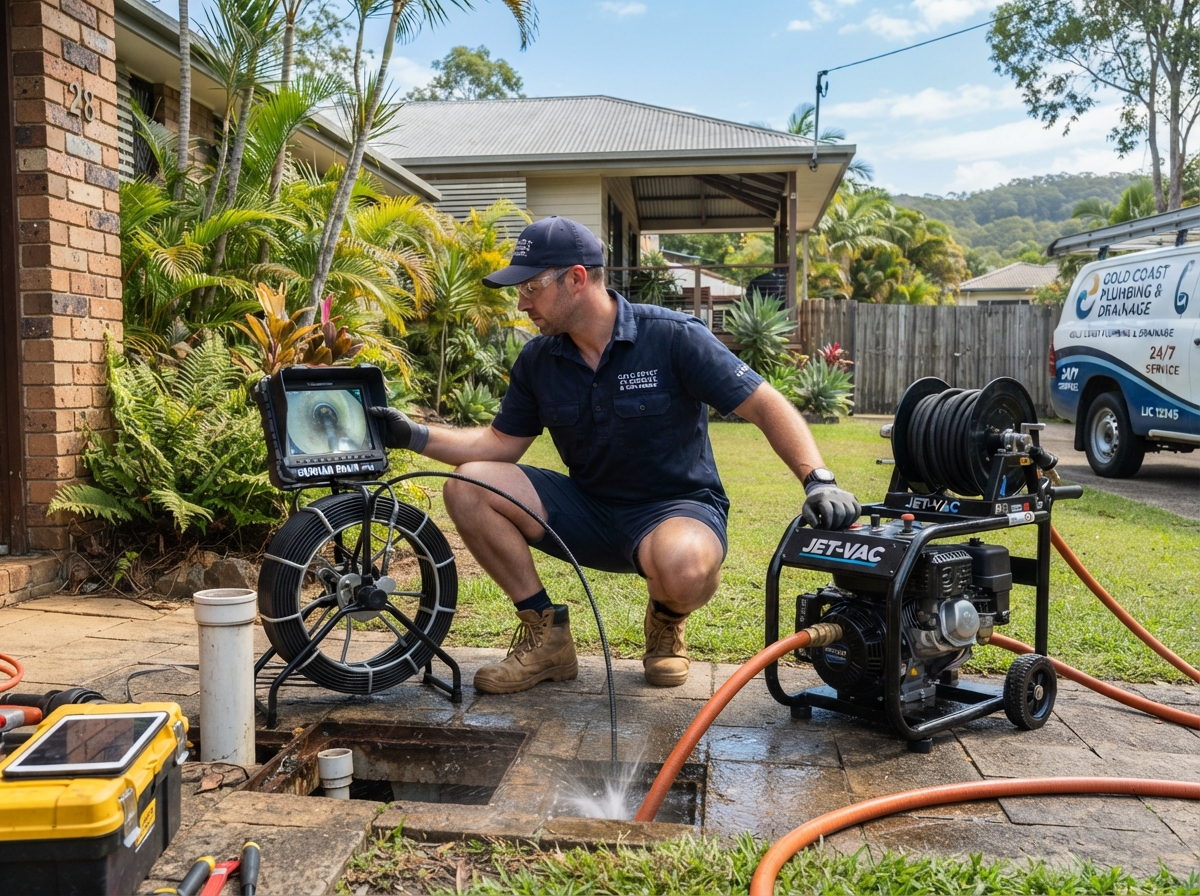
Tree root blockages tend to recur because the root mass regrows after clearing. A CCTV camera inspection identifies exactly where and how roots are entering, and a high-pressure water jetter cuts them out. See our blocked drains service for professional diagnosis and clearing.
2. Grease and fat buildup
Cooking grease poured down the sink may be liquid when warm, but it solidifies as it cools inside the pipe. Over time it builds up on the pipe walls, narrowing the drain until it blocks. Grease blockages are common in kitchen sinks and can be stubborn to clear because the fat adheres to the pipe surface.
The fix is prevention: wipe greasy pans with paper towel before washing, and never pour oil or fat down the drain. See our guide on looking after your drains for more preventative advice.
3. "Flushable" wipes and hygiene products
Despite the marketing, most so-called "flushable" wipes don't break down in water the way toilet paper does. They tangle together and catch on pipe imperfections, gradually forming a blockage. Sanitary products, cotton buds and dental floss cause similar problems.
If you've been using these products and your drains are slowing, read our article on whether flushable wipes are really flushable.
4. Collapsed or misaligned pipes
Older Gold Coast homes may have earthenware or clay drain pipes that crack, sag or collapse over time. A collapsed section creates a lip that catches debris, leading to repeated blockages even after clearing. This is one reason a blockage that keeps returning usually needs CCTV investigation rather than another round of plunging.
5. Foreign objects
Children's toys, jewellery, cotton buds and other objects dropped into toilets and sinks can lodge in the S-bend or further down the line. These blockages often appear suddenly and don't respond to plunging because the object is solid. A plumber can retrieve the object rather than forcing it deeper into the system.
6. Stormwater debris
Stormwater drains can block with leaves, dirt and garden debris washed in during heavy rain — a common occurrence on the Gold Coast. If your stormwater drains overflow during downpours, the grates and downpipe connections may need clearing. See our advice on reducing flooding during storms
Signs of a developing blockage
- Drains that gurgle or make bubbling sounds
- Water draining more slowly than usual
- Unpleasant smells from the drain
- Water rising in the toilet when you run a tap elsewhere
- Multiple slow drains at once (points to a main line issue)
When to call a plumber
If a single drain is slow, a plunger or drain snake may clear a soft blockage. But if the blockage keeps returning, multiple drains are affected, or there's any sign of overflow, it's time for professional diagnosis. Our team uses CCTV cameras to find the exact cause and high-pressure water jetters to clear it properly. Contact our Gold Coast team to arrange a drain inspection.
Frequently Asked Questions
Need a Gold Coast Plumber?
If you're dealing with a plumbing problem and need professional help, our local team is ready to assist.