"Flushable" wipes are one of the most common causes of blocked drains we see on the Gold Coast. Despite the labelling, most wipes marketed as flushable don't break down in water the way toilet paper does, and over time they tangle together inside pipes to form stubborn blockages.
Why "flushable" isn't the same as "breaks down"
Toilet paper is designed to disintegrate quickly in water — it breaks apart into small pieces that flow easily through pipes. Wipes, by contrast, are made from fibres that are designed to stay intact when wet (that's what makes them useful for cleaning). The term "flushable" typically means the wipe will physically fit down the toilet and travel a short distance, not that it will break down in the drain.
Independent testing has repeatedly shown that many wipes labelled "flushable" fail to disintegrate in the way toilet paper does. Some do break down better than others, but as a category, wipes are a leading cause of plumbing blockages.
How wipes cause blockages
Wipes cause blockages in several ways:
- Tangling — individual wipes catch on pipe imperfections, joins or root intrusions, then accumulate more wipes and debris until the pipe blocks.
- Combining with grease — in sewer lines, wipes combine with fat and grease to form dense masses sometimes called "fatbergs" that block the main line.
- Catching on tree roots — if tree roots have entered a sewer pipe, wipes catch on the root mass and accelerate the blockage.
- Blocking the S-bend — a thick wad of wipes can block the toilet's own trap, requiring the pan to be removed to clear.
What to flush instead
The only product designed to break down safely in drains is toilet paper. Everything else — wipes, sanitary products, cotton buds, dental floss, paper towel — should go in the bin. This is the simplest and most effective way to prevent wipe-related blockages.
Signs wipes may be blocking your drains
- The toilet is slow to drain or requires multiple flushes
- Gurgling sounds from the toilet or other drains
- Water rising in the bowl before draining
- Multiple drains slow at once (points to a main line blockage)
What to do if your drains are slowing
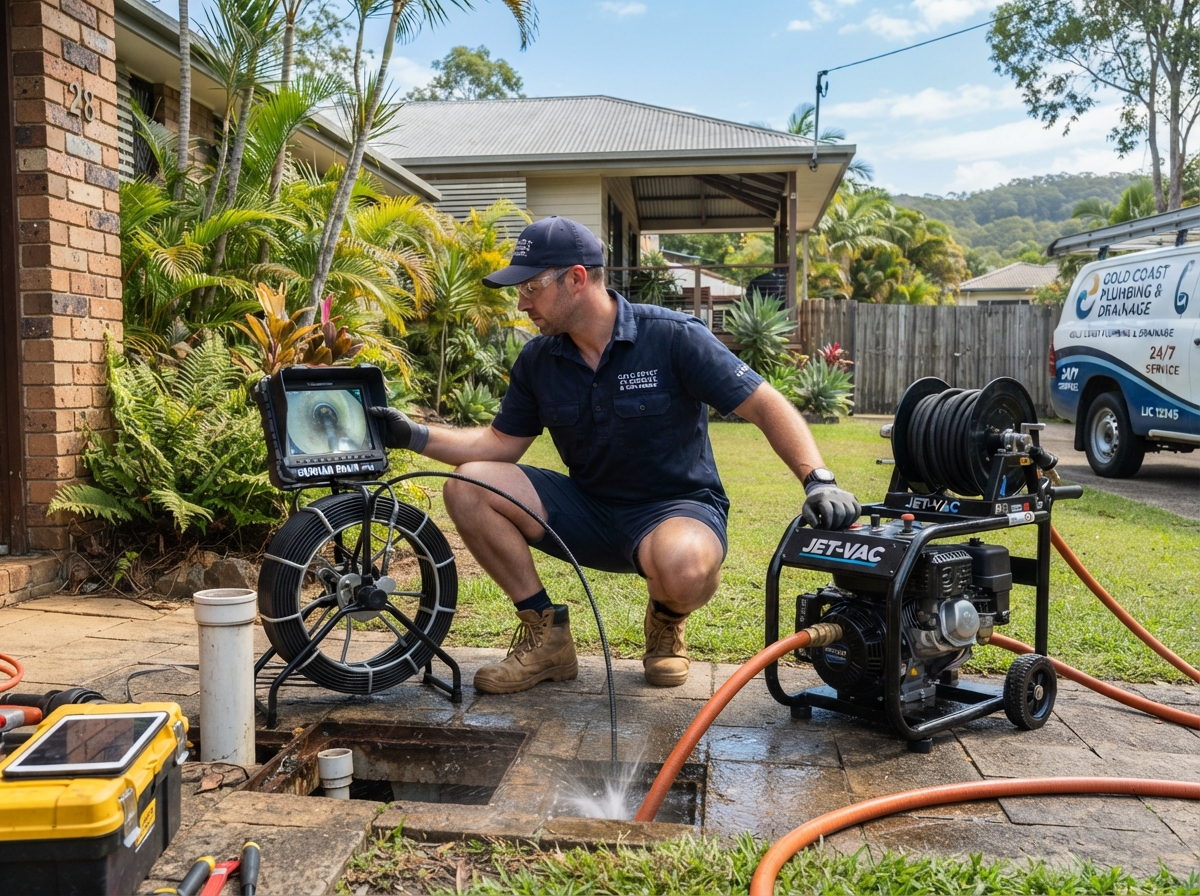
If you've been using flushable wipes and your drains are slowing, stop flushing them immediately. A plunger may clear a soft blockage close to the pan, but a deeper blockage needs professional clearing. Our blocked drains service uses CCTV cameras to locate the blockage and high-pressure water jetters to clear it properly.
If the blockage keeps returning, a CCTV inspection will show whether tree roots or a collapsed pipe section are contributing — see our guide on what causes blocked drains for more on the underlying causes.
Frequently Asked Questions
Need a Gold Coast Plumber?
If you're dealing with a plumbing problem and need professional help, our local team is ready to assist.