A blocked sink is one of the most common household plumbing problems, and the right first steps can often clear it without a callout. But knowing what to try, what to avoid, and when to stop is the difference between a quick fix and a bigger mess. Here's a practical guide.
Initial steps
1. Try a plunger first
Before reaching for chemicals, try a cup plunger. Fill the sink partially with water to cover the plunger cup, place it over the drain hole, and push down firmly several times to create suction. The pressure can dislodge soft blockages close to the drain.
2. Check whether it's one sink or several drains
If only one sink is blocked, the blockage is likely local to that fixture. If several drains are slow at once, the blockage is further down the main line — which usually needs professional clearing. See our blocked drains service
3. Clean the trap
If plunging doesn't work and the blockage is in a kitchen sink, the trap (the U-shaped pipe beneath the sink) may be blocked with grease and food debris. Place a bucket underneath, unscrew the trap, clean it out, and reassemble. This is within reach for a confident DIYer, but be prepared for water spillage.
What not to do
Don't use chemical drain cleaner as a first resort
Caustic and acidic drain cleaners can sometimes clear a soft blockage, but they're a blunt instrument. They can corrode older pipes, damage rubber seals, and make it hazardous for a plumber who later has to open the pipe. If the blockage is caused by a solid object or tree roots, chemicals won't help at all. A plunger or a drain snake is a safer first step.
Don't keep running water into a blocked sink
If the sink isn't draining, running more water into it just creates a bigger mess. Stop running the water and deal with the blockage first.
Don't force a blockage deeper
If a drain snake or plunger isn't working, forcing it can push the blockage further down the pipe, making it harder to clear. If basic methods haven't worked after a reasonable attempt, it's time to call a plumber.
Common causes of a blocked sink
- Grease and fat — solidifies in the pipe, particularly in kitchen sinks. Wipe greasy pans with paper towel before washing.
- Food scraps — rice, pasta, coffee grounds and eggshells. Use a sink strainer to prevent this.
- Soap scum and hair — common in bathroom sinks and basins.
- Foreign objects — jewellery, cotton buds, or items dropped into the drain.
- Partial blockage further down the line — tree roots or a collapsed pipe section cause recurring blockages.
See our guide on what causes blocked drains for more detail on the underlying causes.
When to stop DIY and call a plumber
Stop and call a plumber if:
- Plunging and cleaning the trap haven't cleared the blockage
- The blockage keeps returning after clearing
- Multiple drains are slow at once (points to a main line blockage)
- There's any sign of overflow or sewage backing up
- The blockage is causing gurgling sounds or bad odours
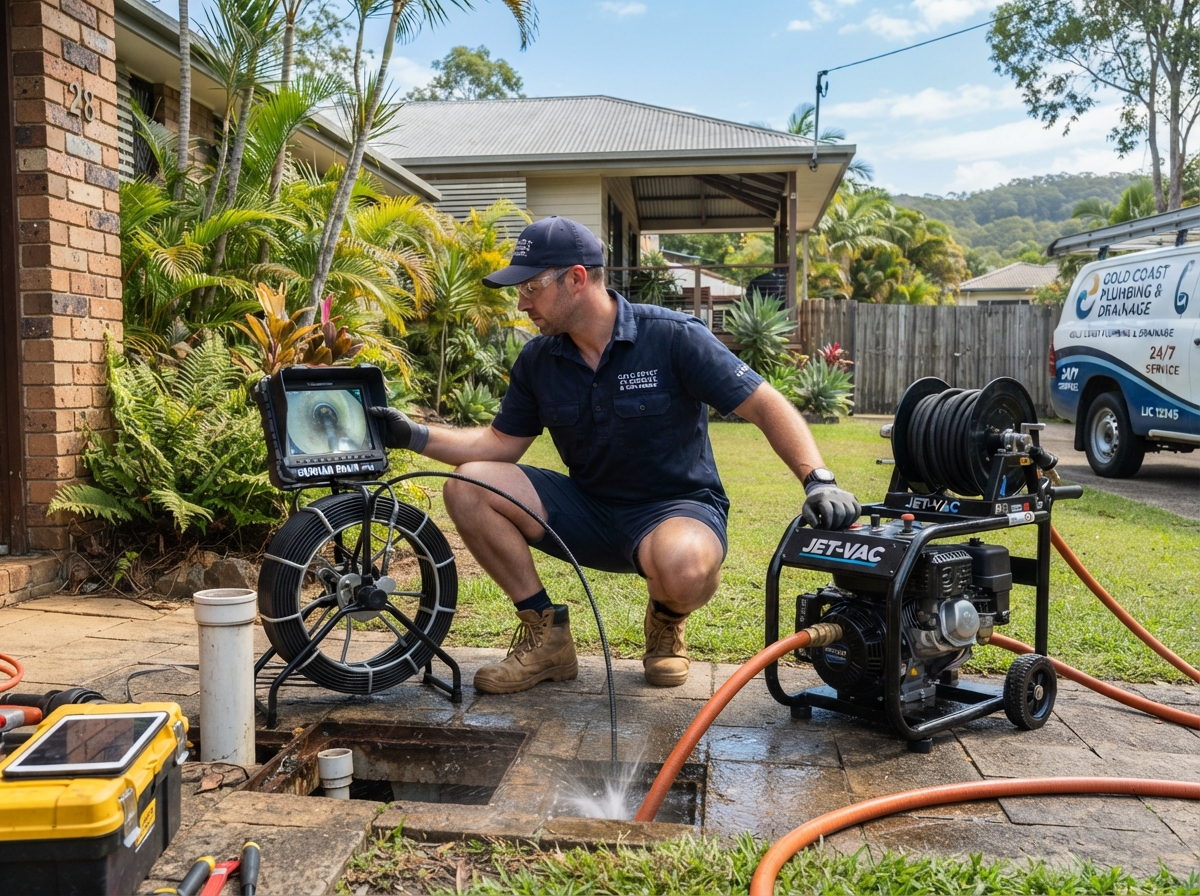
For recurring or stubborn blockages, a CCTV camera inspection finds the actual cause — tree roots, a collapsed section, or grease buildup — rather than just clearing the symptom. Our blocked drains service uses CCTV and high-pressure water jetters to clear blockages properly. If you're on the Gold Coast and your sink is blocked, contact our team for professional help.
Frequently Asked Questions
Need a Gold Coast Plumber?
If you're dealing with a plumbing problem and need professional help, our local team is ready to assist.