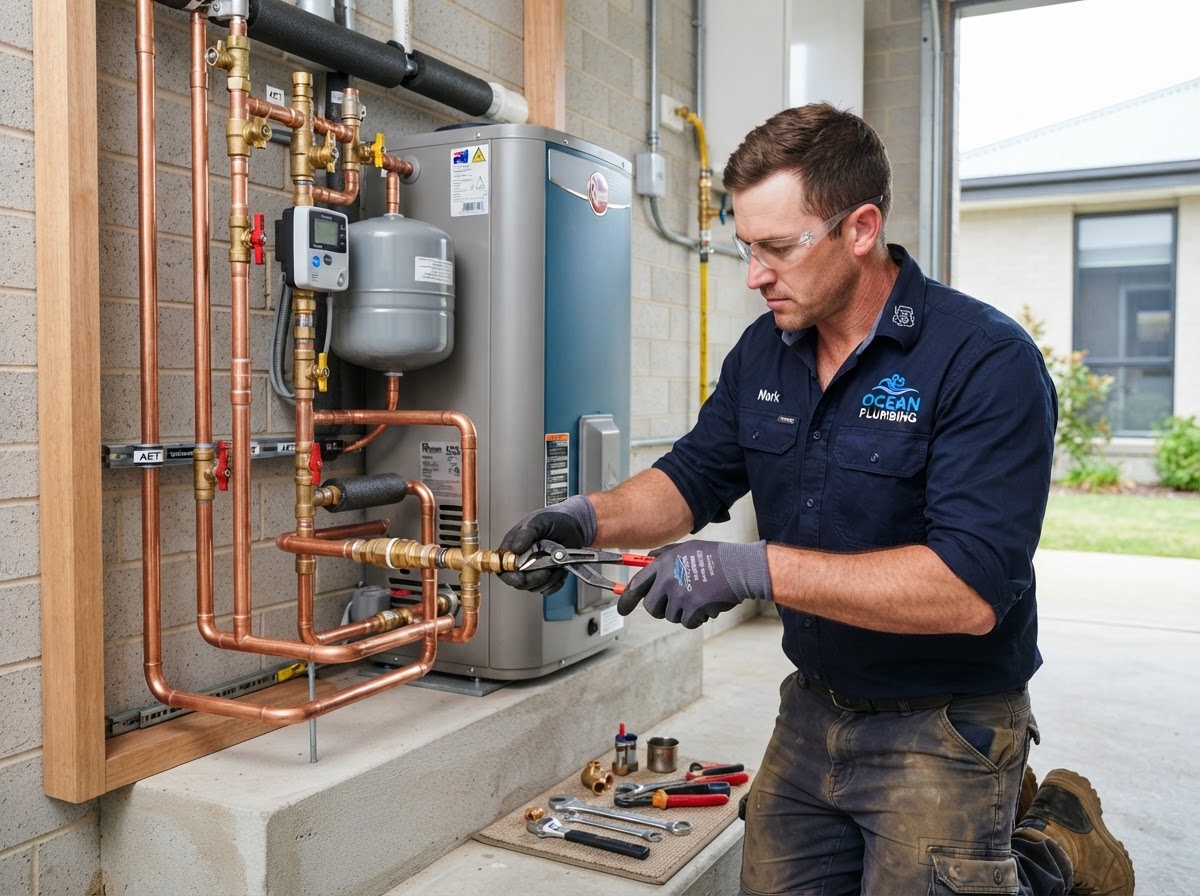
Choosing the right size hot water system is a balance. Too small and you'll run out of hot water during peak times; too large and you'll pay to heat water you never use. There's no universal size that suits every household, but there are clear factors that determine what's right for your home.
1. Number of occupants
The number of people in the household is the starting point for sizing. More people means more showers, more washing-up and more laundry. As a rough guide, a storage system for a 1–2 person household might be around 125–160 litres, while a 4+ person household typically needs 250 litres or more.
These are guidelines only — actual usage varies with habits, fixture efficiency and how many people shower at the same time each morning.
2. Peak demand
Peak demand is the maximum amount of hot water your household uses in a short window — usually the morning shower rush. A family of five showering between 6am and 7am has a very different peak demand to a couple who shower at different times. Storage systems need enough capacity to cover the peak; continuous flow systems need enough flow rate (litres per minute) to serve simultaneous use.
3. System type
The type of system affects how you think about size:
- Storage systems (electric, gas, solar) — sized by tank capacity in litres. You need enough stored hot water to cover your peak demand before the tank reheats.
- Continuous flow (tankless) systems — sized by flow rate in litres per minute. They heat water on demand, so capacity matters less than the ability to serve multiple outlets at once.
- Heat pump systems — sized like storage systems, with recovery times affected by ambient temperature.
4. Available space and installation
The physical space available can constrain your choice. Storage tanks need floor or wall space proportional to their capacity, while continuous flow units are much smaller. If you're replacing an existing system, matching the location and connections can simplify installation, but it shouldn't override correct sizing.
5. Energy source
Energy source affects both sizing and running costs:
- Electric — straightforward sizing, but higher running costs unless on an off-peak tariff.
- Gas — fast recovery, so a smaller tank may suffice compared to electric.
- Solar — sized with a larger tank to store water heated during the day, often with a gas or electric booster.
- Heat pump — efficient, but recovery is slower than gas, so sizing needs to account for reheating time.
6. Future changes
If your household is likely to grow — a growing family, a new bathroom, or taking in a parent — it's worth sizing for the near future rather than just today. Upsizing later means replacing the whole system, so a little extra capacity now can save a premature replacement.
Getting the sizing right
Correct sizing depends on your household's specific usage, your existing plumbing, and the system types available to you. A plumber can assess your peak demand, available space and energy options and recommend a system sized for your home. Contact our Gold Coast hot water team for tailored advice.
Frequently Asked Questions
Need a Gold Coast Plumber?
If you're dealing with a plumbing problem and need professional help, our local team is ready to assist.