Tackling a dripping tap or a slow drain yourself can be satisfying and save a service call — but DIY plumbing has a way of turning small problems into expensive ones when the basics aren't right. Below are the five mistakes we see most often on the Gold Coast, and how to avoid them.
1. Overtightening fittings and connections
It's natural to assume tighter means safer, but overtightening is one of the most common causes of cracked fittings and stripped threads. Plastic and brass fittings in particular can split under excessive force, and the crack often doesn't appear until weeks later when the fitting finally gives way.
The fix: tighten by hand until firm, then give no more than a quarter to half turn with a tool. If a joint needs more force than that, the thread seal or washer is probably the problem, not the tightness.
2. Using chemical drain cleaners as a first resort
Pouring caustic or acidic drain cleaners into a slow drain can sometimes clear a soft blockage, but it's a blunt instrument. These chemicals can corrode older pipes, damage rubber seals, and make it hazardous for a plumber who later has to open the pipe. If the blockage is caused by tree roots or a solid object, chemicals won't help at all.
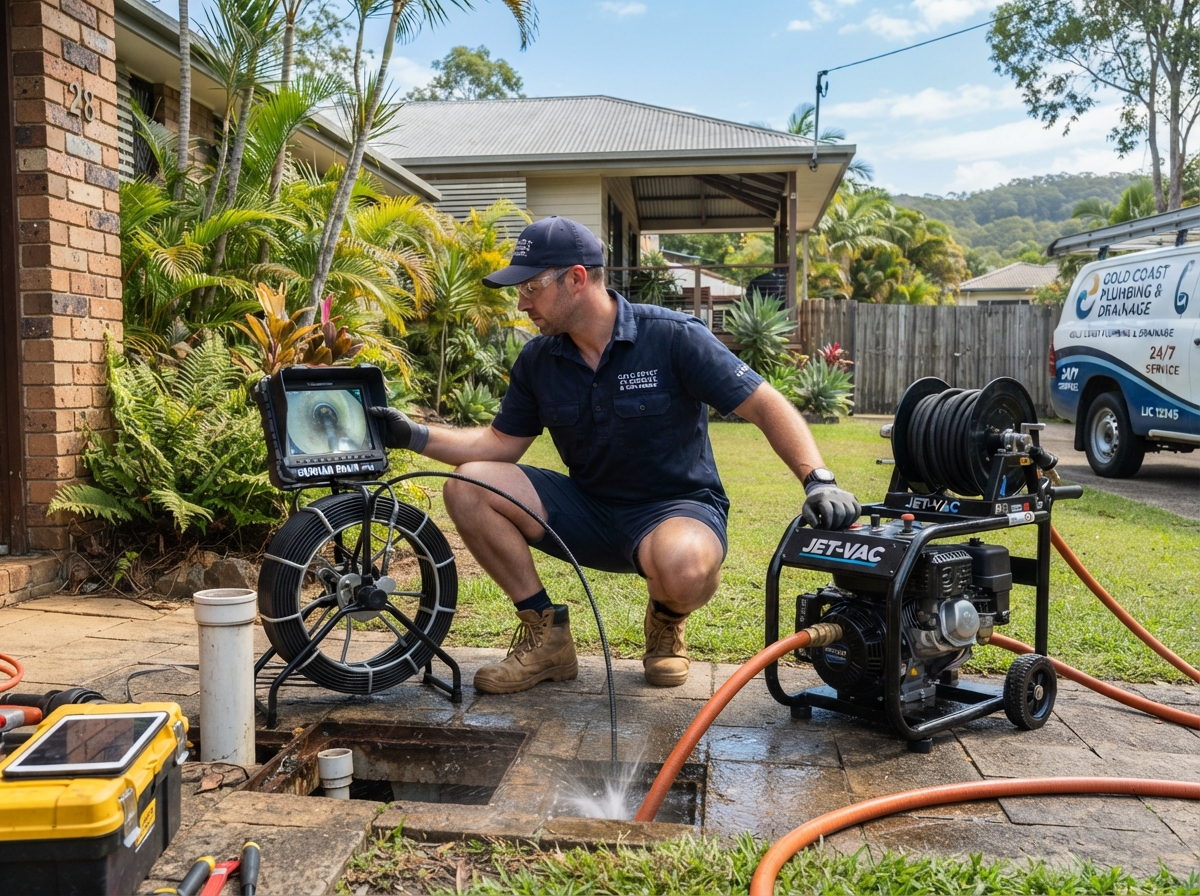
A plunger or a drain snake is a safer first step. If the drain is still slow after that, it's time for professional blocked drain clearing with CCTV inspection to find the actual cause.
2. Replacing a washer without checking the seat
A dripping tap is often a worn washer, so replacing it seems like the obvious fix. But if the brass seat the washer presses against is worn or grooved, a new washer will only last a few weeks before the drip returns. Re-seating or replacing the entire tap assembly may be the proper solution.
If you've replaced a washer twice and the tap keeps dripping, the seat is likely the culprit. Our general plumbing services can re-seat or replace the fitting properly.
4. Ignoring the main water shut-off valve
Before any plumbing repair, you need to isolate the water. Many homeowners only discover their main shut-off valve is seized or doesn't fully close once a pipe is already open — by which point a small job has become a flooding emergency.
Test your main shut-off valve before you need it. If it's stiff or won't turn, have a plumber service or replace it. Knowing your valve works is also essential if a burst pipe ever occurs.
5. Mixing galvanised and copper pipes without proper isolation
Joining dissimilar metals directly causes galvanic corrosion, where one pipe effectively eats the other. In older Gold Coast homes that still have galvanised supply lines, a direct copper-to-galvanised join will fail prematurely and can restrict flow with rust buildup.
Use a dielectric union or an approved transition fitting to separate the metals. If you're unsure what pipe materials your home has, it's worth getting a professional assessment before modifying anything.
When DIY isn't worth the risk
Anything behind a wall, under a floor, involving gas, or connected to the main sewer line should be left to a licensed plumber. The cost of a professional repair is almost always less than the cost of repairing water or gas damage from a failed DIY attempt. If you're unsure, contact our Gold Coast plumbing team for advice before you start.
Frequently Asked Questions
Need a Gold Coast Plumber?
If you're dealing with a plumbing problem and need professional help, our local team is ready to assist.